
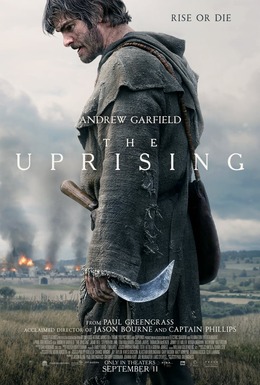
Paul Greengrass is a respected director, responsible for a large corpus of work, but most notably three Bourne films and United 93, as well as respected documentaries on subjects like the murder of Stephen Lawrence. The Uprising is his brown study of the 1381 “Peasants Revolt”.
The unnamed central character, Ploughman, played by Andrew Garfield, is the trigger that sets off the revolt that has been brewing from punitive tax collection. Real leaders life preacher John Ball and soldier Wat Tyler come into focus as main, but not central characters, together with a traumatised former nun, Alyce.
On the establishment side of the conflict are bad dreamer boy king Richard II, his icy mother Joan of Kent, and a roster of slimeballs as his councillors, who – despite their deference – are actually in charge of England. Two armies have to be recalled from France and Scotland so they have to play for time and attempt to contain the spreading rebellion.
The film is shot in Sludgerama: peasants never wash and are only clad in rough cloth of brown and grey in a palette of grimescapes. Goodness knows how he ever managed to father two deceased children with his deceased wife in pre-plague times. The camerman has obviously also contracted a St Vitus’ Dance as it shakes all the time.
No-one expects a film to be historically accurate and you can argue the many liberties it takes with fact are to give viewers a clear storyline though complex historical events: the revolt didn’t break out until the third imposition of taxes, not the first. The peasants were normally not expected to pay taxes at all – instead they gave produce to their local Lord in lieu of cash, and he paid actual money to the crown. So the Poll Tax broke all these rules.
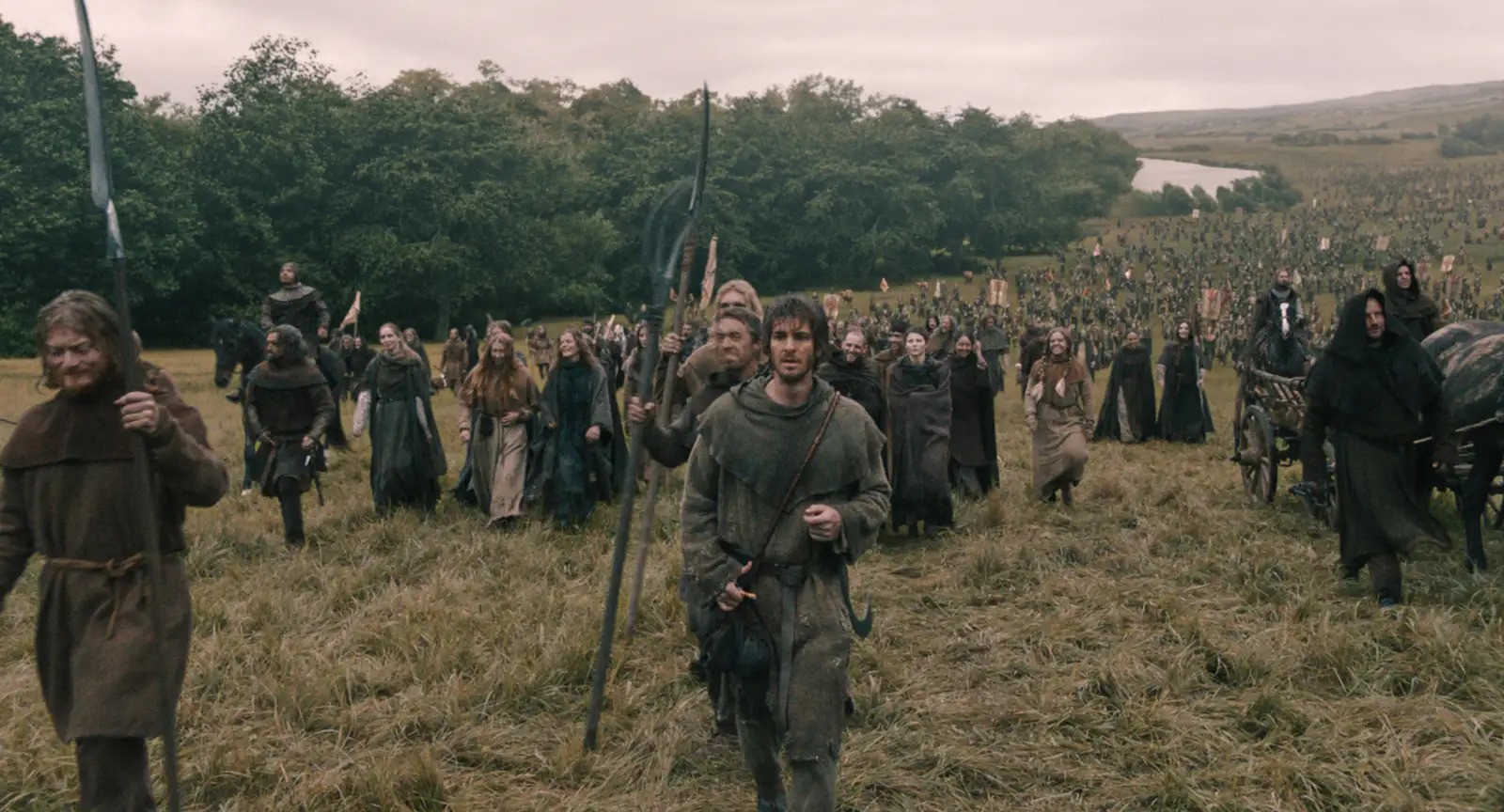
The peasants proceed to London, wrecking palaces on the way, burning tax records. They have a list of demands for the king. He boats towards them on the Thames, but does not come ashore. An oriental scribe is sent over and takes the parchment.
After considerable messing around, it all goes badly wrong for the peasants and they get duffed up by the military, with Tyler and John Ball being killed. The decent scribe tries to warn the people so gets the chop. Ploughman escapes the massacre with Alyce.
I was wondering why there was still 15 minutes to go, but then the film cross edits to Robin Hood in Sludgewood. You get the world’s “best” (and probably only) sword versus hand-scythe fight, with villain the Mayor of London getting his just desserts from RobinHoodDirtMan and the King being humiliated, but let off. Cue end credits.
This preposterous ending seems to have parachuted in from another galaxy, far far away. It destroyed the little credibility The Uprising had left.
It wasn’t a bad film, just the narrative choices seemed awry and even the fighting didn’t quite convince as we have actually seen phone footage of lightly-equipped people rucking with armoured brutes across Europe. They didn’t throw any stones or flashmob single enemies in the confusion.
Not a movie I would bother seeing again.